
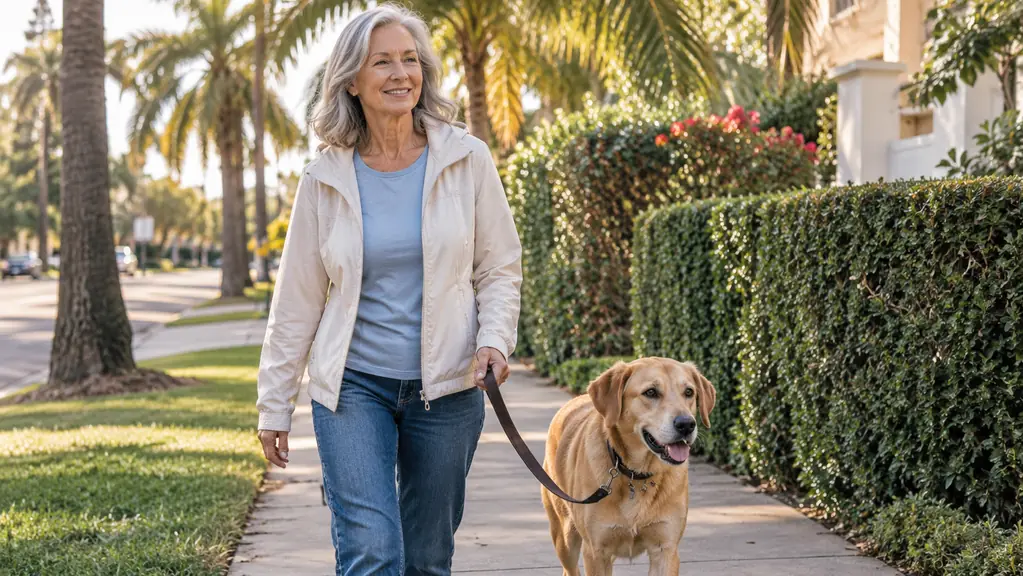
The first walk after I brought Moose home was a mess. He was four months old and mostly legs, and he hit the end of that shelter leash so hard he spun himself sideways on the sidewalk. By the time we made it back up the driveway my right shoulder was aching and I was doing the arithmetic on how big he would be in a year. I grew up with family dogs. I had never trained one myself.
So I did what I always do when I do not know something. I read. I read the shelter handout twice, I watched free videos from trainers I have never met, and I asked the volunteer who had walked Moose at the shelter what she used on the pullers. She said a front clip harness, and she said it in a tone that suggested I should have known already. I bought the PetSafe Easy Walk Harness in a size Large in May, when Moose was about six months old and thirty five pounds. This is what several months of twice daily walks with it have been like in our house.
The Quick Verdict
It gave me back control of the leash on a strong, distracted puppy. It did not train him. The stopping and turning around did that. Still on every walk six months later.
Amazon Check Today's Price →If your shoulder is sore and your dog is winning the walk, start here
The PetSafe Easy Walk puts the leash attachment on the chest instead of the back, so a pull turns your dog sideways instead of forward. It is the harness I bought in May and still clip on Moose every morning.
Amazon Check Today's Price on Amazon →How I've Used It
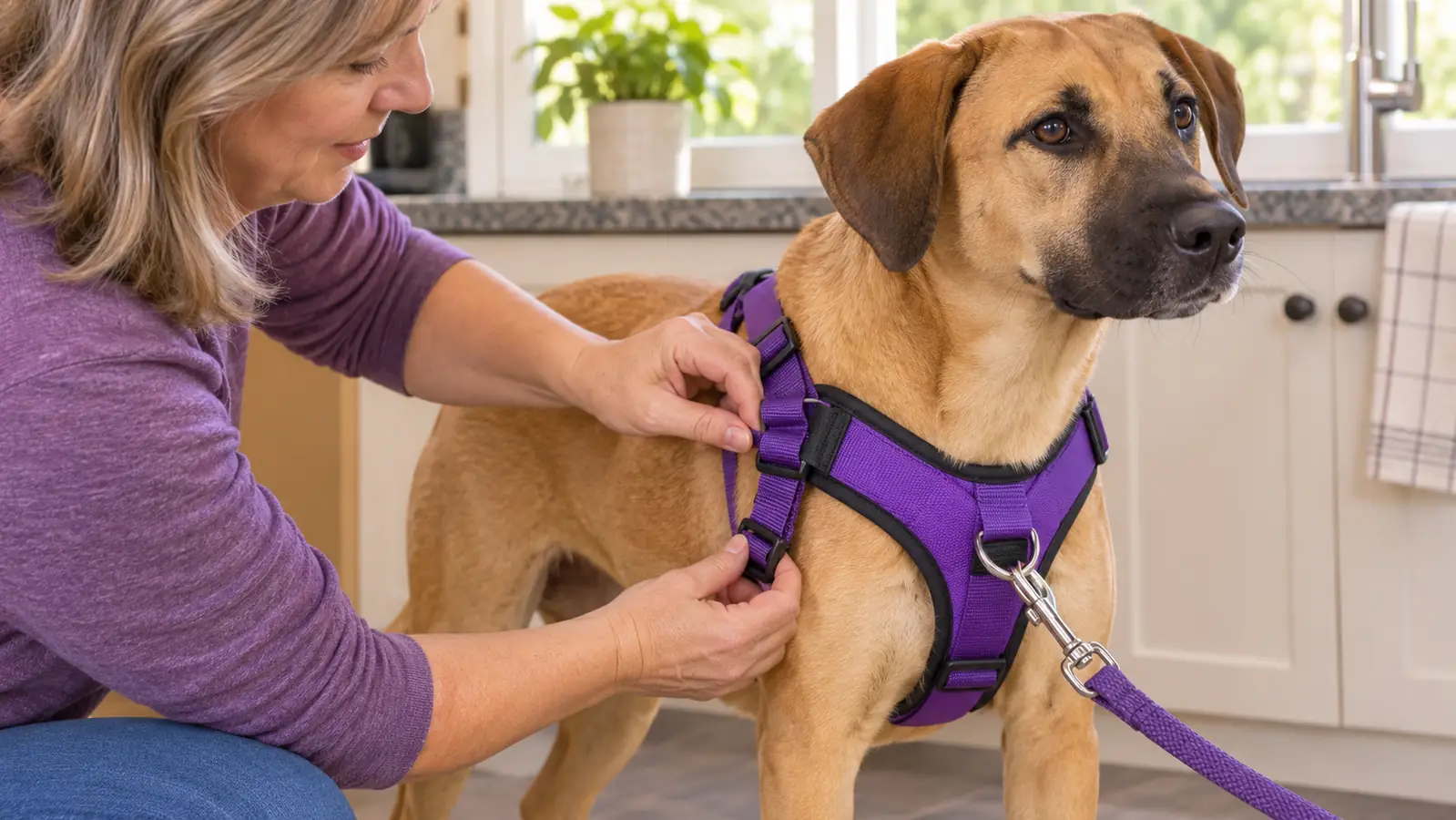
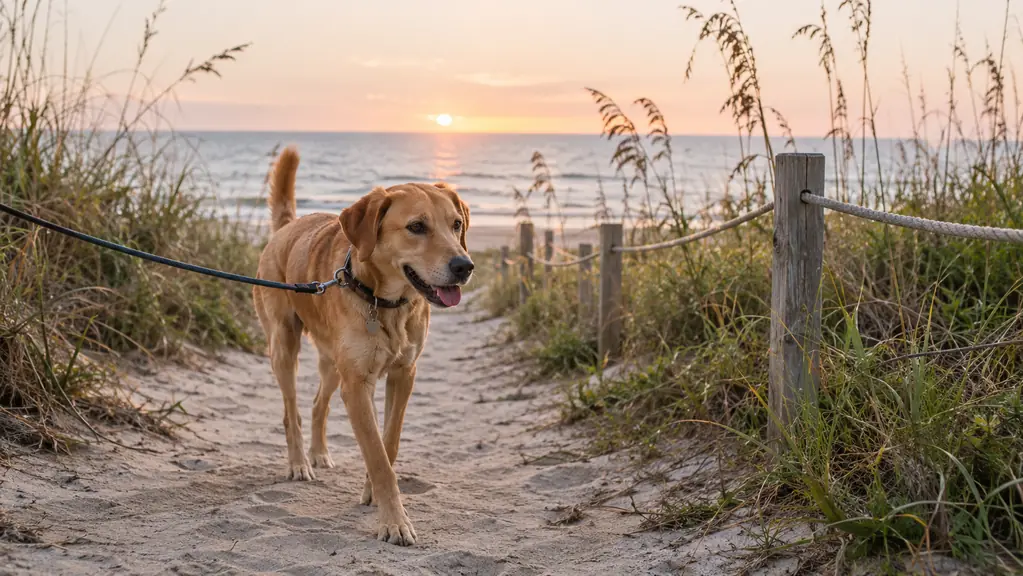
Moose wears it on every single walk. Morning is a loop around our block in Myrtle Beach before the heat builds, and evening is the longer one, sometimes down to the beach access path if the tide is right. I put it on in the kitchen, clip the leash to the ring on his chest, and out we go. No treat pouch on a normal walk. No stopping every ten feet to reset him.
The way I was taught to use it, and the way that has actually worked here, is to keep the leash loose and let the front clip do the steering. When Moose surges ahead, the strap across his chest tightens and turns him back toward me instead of letting him drag the both of us down the street. The listing describes this as a patented Martingale loop design that puts gradual pressure on the shoulders, and gradual is the honest word for it. It is not a jerk. It is closer to a correction he gives himself the moment he commits to pulling.
The other half of it was on me. I stopped letting him walk in front of me like a sled dog. I keep him at my left side, and I stop moving the instant the leash goes tight. That is not a PetSafe feature, that is just what worked. The harness gave me the ability to hold the line long enough for the stopping to mean something to him.
What the Front Clip Actually Does
A back clip harness, the kind with the ring between the shoulder blades, gives a dog something to lean into. That is not a knock on those harnesses. They are built for a different job, and plenty of calm dogs do fine in one. But if your dog is already a puller, a ring behind his shoulders is roughly a tow hitch.
The Easy Walk puts the attachment on the chest instead. When Moose pulls, the leash pulls him sideways rather than forward. He ends up facing me instead of facing the squirrel. The first week he did a good deal of confused circling, and I understand now that the harness was doing exactly what it was supposed to do. He could not build forward momentum, so he stopped trying to.
It also has a belly strap, and the listing notes it is a different shade from the shoulder straps so you can tell at a glance which strap goes where. That sounds like a small consideration until you are crouched on a kitchen floor with a wiggling puppy and you are already late for a grooming appointment. It is not a small thing then.
The straps are nylon and the closure is a buckle. The whole harness weighs a little over nine ounces according to the listing, which I can believe because Moose does not walk stiffly in it the way he did in the collar and leash setup. There is a one year manufacturer warranty, which I have not needed to use. The quick snap shoulder straps make it easy to get over his head once you have the fit sorted, which took me a few tries.
Fitting It Took Me Three Tries
The listing says easy to fit. It has quick snap shoulder straps. I still got it wrong twice. The first time I had the chest strap too loose because I was afraid of pinching him, and he stepped out of the front of it in the middle of the sidewalk. Nothing dramatic happened. He simply walked out and stood there looking at me while I stood there holding a leash attached to nothing. I carried it home and felt foolish.
The second attempt was the opposite. I overcorrected and cinched it snug enough that he kept stopping to scratch at his own chest. That is the mistake I would warn a friend about first. You want the harness snug enough that the straps do not shift when your dog turns, but not so tight that a strap digs in. I settled on checking that I could slide a couple of fingers under each strap, and I checked the fit every couple of weeks because he was still growing. I adjusted the straps twice between May and now. He is about forty five pounds and the Large still fits with room left in the adjustment.
One more fitting note that cost me a week. The strap that crosses his chest sat a little too low at first, and it rubbed at the inside of his front legs on longer walks. Moving it up one setting fixed the rubbing completely. If your dog is built deep and narrow like Moose, expect to spend a week fiddling before it sits where it should.
How the Walks Changed Over the Months
I want to be careful with this part, because I am not a trainer, I am a retired dental office manager with a laptop and one dog. I cannot promise anyone a result. What I can tell you is what happened on our street.
In May, walks were short and frustrating. He pulled toward every smell, every mailbox, every dog barking behind a fence. It was not a discipline problem exactly. He was about six months old and the whole world was new and interesting and he wanted to be at all of it at once. I came home annoyed more days than not.
By July something shifted. I do not think the harness trained him. I think it stopped him from rehearsing the pulling over and over, which is what the collar and leash had been letting him practice. The stopping when the leash went tight did the rest of the work. He started checking in with me. He would reach the end of the leash, feel it, and turn his head back to see where I was.
By fall, most walks were pleasant. He walks on a loose leash most of the time now, and the times he does not are predictable. A squirrel. A cat under a parked car. Another dog coming toward us with that alert posture that says he wants to meet. The difference between May and now is not that he stopped caring about squirrels. The difference is that when he does care, I can hold him with one hand and turn him with the leash instead of being towed.
That is the whole point for me. I am fifty seven. I am not looking for a wrestling match on a sidewalk in August humidity, and I would like to keep walking this dog for another ten years. The harness is what makes the morning loop something I can do half awake.
The Parts That Still Annoy Me
It is hand wash only. That is stated right in the listing and I believe it, because ours has been in the sink more than once and it takes the better part of a day to dry. I try to wash it on a Sunday when we are not walking as much anyway. Something I could throw in the machine would be easier on a house with a busy dog.
The sizing skews toward the generous side of Large, or Moose is on the smaller side of it. When he was thirty five pounds, the Large was a bit big on him even at the tightest adjustment and I had to be patient for a few weeks until he grew into it. If your dog is right on the line between sizes, that is worth knowing before you order.
The front clip takes a few seconds longer to attach than a collar does, especially in the early dark of a winter morning. I clipped the leash to the wrong ring exactly once, on a morning when I was not paying attention, and Moose was halfway down the driveway before I noticed. Now I check with my hand every single time, the way I check that the back door is locked before bed.
And the biggest one. It does not fix the dog. It is a piece of nylon webbing with a ring in the right place. If I had put it on him in May and never taught him anything, I think we would be right where we started, just with more straps to wash. The harness bought me control. The stopping and the turning around is what changed the walks.
What I Liked
- Front clip turns a pulling dog sideways instead of letting him tow you forward
- Quick snap shoulder straps make it fast to get on once the fit is sorted and adjustment is possible as a puppy grows
- The belly strap is a different shade from the shoulder straps, which makes it easy to see which strap goes where
- Light enough that Moose runs and moves naturally in it
- One year manufacturer warranty
Where It Falls Short
- Hand wash only, and it takes most of a day to dry
- The Large ran big on a thirty five pound pup even at the tightest setting
- The chest strap sat too low at first and rubbed until I moved it up a setting
- The front clip takes a moment longer to attach than a plain collar
- It is a control tool, not a training fix, and it will not teach anything on its own
The harness did not train my dog. It bought me enough control that I could train him.
Who This Is For
Someone with a dog who pulls and a shoulder that has started to complain about it. Someone who has already tried the plain collar and the back clip harness and found themselves being towed down the block. Someone who is willing to stop walking every time the leash goes tight, because the harness is only half of the job and the stopping is the other half.
There was an unexpected benefit for us too. Moose was nervous with new people when he came home, and because he cannot lunge forward into someone's space while wearing this, greetings happen at a distance he can actually handle. That was an accident of buying it. It is one of the reasons I keep reaching for it.
Who Should Skip It
If your dog is a large, strong, committed puller who has already towed a full grown adult through a parking lot, this may not be enough harness. The straps are nylon, the fit is set by buckles, and I have read enough reviews from owners of big powerful dogs to accept that some of them need something with more structure. That is not a knock on the PetSafe. It is a fit question.
If your dog has a shoulder, neck or joint issue, ask your vet before you put any harness on him, front clip or otherwise. Movement changes when the attachment point changes, and I am not qualified to guess about that.
And if your dog has bitten, guards food or people, or shows aggression on the leash, this is not the article you need. A harness is not a behavior plan. Call your vet and find a certified trainer or a veterinary behaviorist who can see your dog in person. I say that as someone who bought one piece of gear at a time and figured it out slowly, not as anyone with a credential.
Six months in, it is still the first thing I reach for before the morning loop
The PetSafe Easy Walk is not a training program and it will not suit every dog. In our house it turned a shoulder-wrenching walk into something I can do with one hand, and that is the reason it stays by the back door.
Amazon Check Today's Price on Amazon →