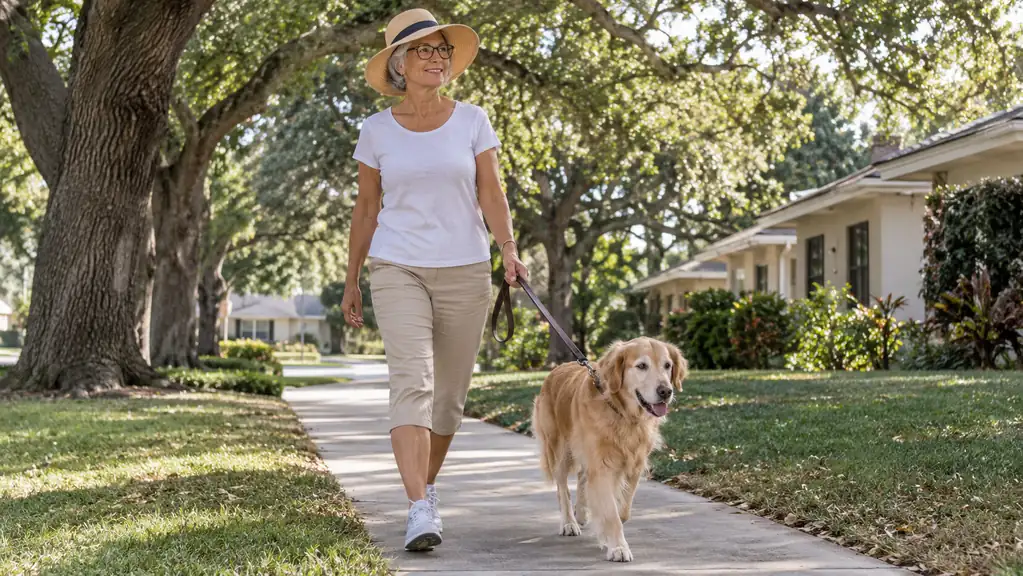
Moose came home from a Myrtle Beach shelter in early March, four months old and already stronger than he looked, and he walked like a dog who had never been on a sidewalk in his life. Every smell was a reason to lunge. Every passing dog was a reason to spin. By May my right shoulder ached after every morning loop, and that is when I bought the PetSafe Easy Walk harness in a size Large, with the leash clipping to a ring on his chest instead of his back.
A back-clip harness is the other thing people hand you when you say your dog pulls. It is the harness most dogs already own: straps over the shoulders, leash ring sitting between the shoulder blades. Here is the short answer after six months in the Easy Walk. For a dog who pulls, the PetSafe does something a back-clip design cannot, because the ring is on the chest and a pull turns the dog back toward the person holding the leash. A back-clip harness is not bad gear. It is built for a dog who already walks politely, and mine did not.
| PetSafe Easy Walk | Back-Clip Harness | |
|---|---|---|
| Where the leash clips | Ring on the chest, in front of the dog, so a pull turns the front end | Ring between the shoulder blades, behind the pull |
| When the dog leans in | The martingale loop puts gradual pressure across the shoulders and the dog slows to straighten out | Nothing redirects him, the leash just gets longer |
| Comfort on a dog who already walks well | Straps cross the chest and one runs behind the front legs, so there is something to check after every walk | Padding over the shoulders, nothing across the chest, nothing behind the front legs |
| Rubbing behind the front legs | A real risk, and I check it after every single walk | Not a factor, since no strap sits there |
| Getting it on and off | Quick-snap shoulder straps plus a belly strap, a couple of seconds once you learn the order | Usually over the head or a step-in, about the same |
| Long lines and trail walks | Works, but it is interrupting the dog's stride the whole time | Stays clear of the front legs and does not fight a dog who ranges ahead |
| Best for | A dog who already pulls and an owner with a sore shoulder | A dog who walks politely and needs a comfortable way to carry tags |
Why I Am Comparing Designs Instead of Two Boxes
In our house there is exactly one harness. I am not going to pretend I bought three and ran a proper test, because I did not, and you would be able to tell. What I did do was read both listings line by line, ask the shelter volunteer who fitted Moose why she handed me a front-clip instead of the other kind, and pay attention for six months to what actually changed on our walks. Everything below comes from the product page, from that conversation, or from my own notes on the beach access path. Where I am guessing, I will say so.
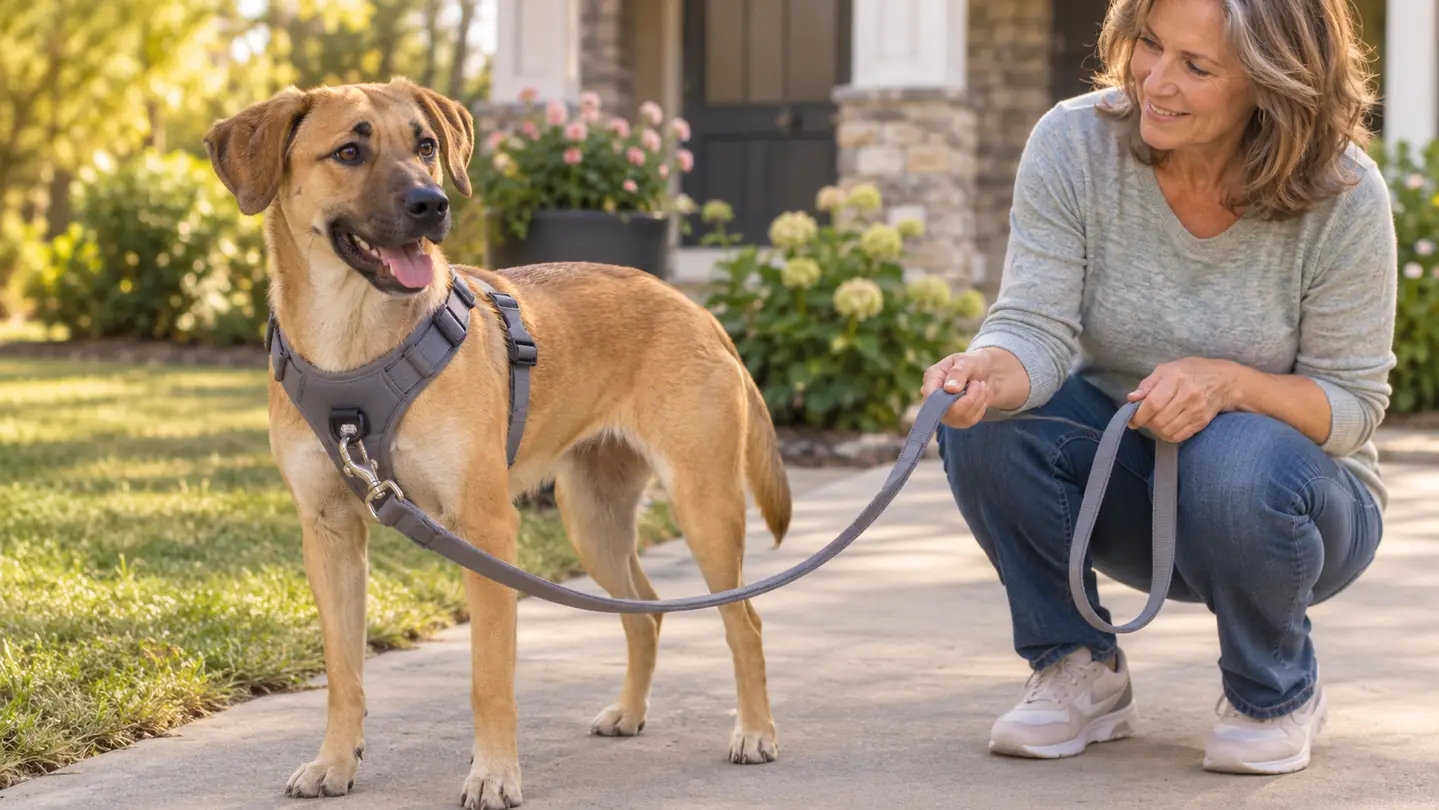
The design difference is simple enough to hold in your hand. The Easy Walk puts the leash ring at the front, on the chest, and the listing describes a patented martingale loop that puts gradual pressure across the dog's shoulders when he leans into it. A back-clip harness puts the ring at the rear, on top of the shoulders. When a dog pulls in a front-clip, the pressure turns his body sideways and he has to slow down to keep going straight. When a dog pulls in a back-clip, the pressure sits behind the pull. He leans, the harness takes it, and the walk continues exactly as it was.
Where PetSafe Easy Walk Wins
The steering is the whole argument, and it is the reason the shelter volunteer did not even bother showing me the other kind. The listing says the harness was created by a veterinary behaviorist in 2004, and I can see why the design lasted, because the idea is not complicated. The leash attaches in front. A dog who surges forward finds his front end redirected instead of reinforced. In the first week I used it, Moose did the thing that made me a believer. He hit the end of the leash after a squirrel, felt the turn, and stopped to look back at me. He had never once looked back at me on a collar.
The second thing the Easy Walk does well is fit a dog who is still growing. The listing describes quick-snap shoulder straps, a buckle closure and a separate belly strap, and the whole thing goes on and off in a couple of seconds now that I know the order. Moose was around thirty-five pounds when I bought it and he is about forty-five now, and I have refit the straps twice as he filled out through the chest. It is nylon, the care instructions say hand wash only, and there is a one year manufacturer warranty, which tells you the maker expects it to be worn hard. I have not needed the warranty.
What it does not do is give the dog a vote. He cannot back out of it easily, which is the point, but that also means you have to be honest with yourself about how tight the straps sit and how he behaves when he is worried. I check behind his front legs after every walk. More on that in a minute, because it is the one honest complaint I have.
Where the Back-Clip Harness Wins
Comfort, and I am not being generous about it. A back-clip harness does not cross the chest and does not run a strap close behind the front legs, so there is much less to rub. The Easy Walk does both of those things, and the strap behind Moose's front legs is the one I check after every single walk. In six months I have found one small thin patch of coat and I moved that strap a notch. A back-clip wearer does not have that chore at all. If your dog has sensitive skin under the arms, or your vet has already told you to keep pressure off the chest, the back-clip is the kinder shape.
The other place the back-clip wins is anywhere the leash is long. On a long line at the beach, or on a trail where the dog is mostly off to the side, a ring between the shoulders stays clear of the front legs and does not fight his stride. The Easy Walk is a walking tool. It is designed to interrupt a pull, and interrupting a pull is the opposite of what you want on a loose trail where the dog is ranging ahead and sniffing. For a dog who already walks well, a back-clip harness is simply the most comfortable way to carry a set of tags.
If your walks end with a sore arm, start with the ring on the chest
The PetSafe Easy Walk in size Large is the harness that goes on Moose every morning. Measure your dog's girth and check the size chart before you order, then give yourself a week of short walks to learn the strap order.
Amazon Check Today's Price on Amazon →What Six Months of Daily Walks Actually Looked Like
May was short loops. Three blocks and home, because I wanted him used to the straps before I asked for anything harder. He walked with his head down and his tail low for the first two days, which the quick start guide in the box had warned me about, and by the fourth day he was trotting to the door when I picked it up. June was the first refit. He had grown through the chest and the strap behind his front legs was sitting too snug, so I let it out a notch and the thin patch of coat filled back in over the summer.
July and August were when the harness stopped being equipment and became just how we left the house. The pulling did not disappear. He still hits the end of the leash at a squirrel, and there is a cat on the corner who has ruined more walks than I can count. What changed is that I can hold him with one hand and wait it out. Before the harness, a squirrel meant two hands, planted feet and a shoulder that hurt the next day. Now it means a dog who turns sideways, stops, and looks at me for the treat I am absolutely going to give him.
September to now has been morning loop, evening loop, and the beach access path early on weekends. Sand is harder work for both of us and the harness handles it fine. He is around a year old, still strong, still opinionated, and I still check the straps every few weeks because he is still filling out. The honest summary is that the harness bought me a second or two to reward him, and the rewarding is what did the actual teaching. The harness just made the second or two possible.
The leash ring is the whole argument. On the chest, a pull turns the dog back toward me. Between the shoulders, a pull only gets longer.
Sizing, Fit, and the Part That Surprised Me
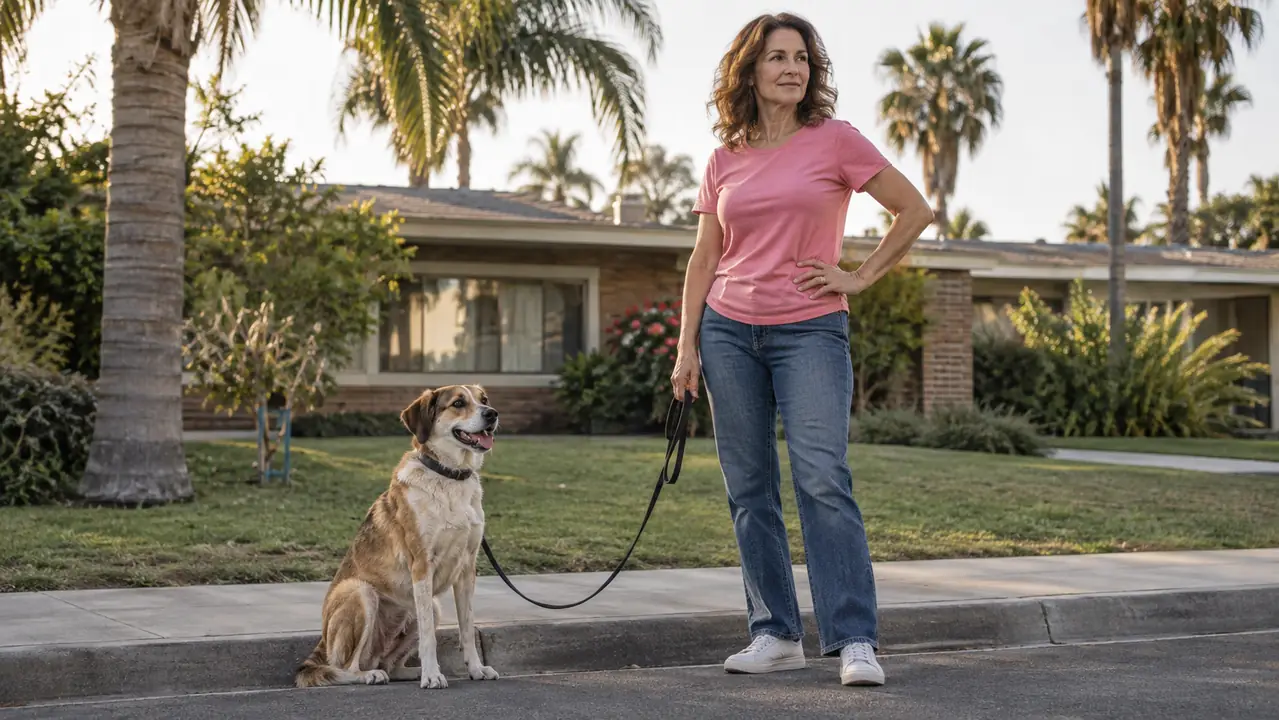
The size chart is not the same as a weight range, and this tripped me up. A harness has to fit around the dog's girth, the measurement around his ribcage just behind his front legs, and a dog can be the right weight for a size and still be between sizes. Moose measured into a Large at thirty-five pounds and he is still a Large at forty-five, which surprised me. My advice is to measure twice, order once, and accept that you will be adjusting straps for a month.
The reviews are worth reading before you buy, and I say that as someone who usually skips them. The listing shows an average of 4.3 across more than forty-eight thousand ratings, and the lower ones I read mostly described two things: a dog who learned to back out of the harness, and straps that loosened over time. I have not had the back-out problem, possibly because Moose is not built that way, but I do check the straps before every walk the way I check that the back door is latched. Both of those complaints are worth knowing about instead of discovering them on a Tuesday.
What Neither Harness Fixes
Neither one teaches a dog to walk on a loose leash. The Easy Walk interrupts a pull, which buys you a second to reward the dog for coming back to you. If you never reward that, you have a dog who is being steered rather than trained, and steering works right up until it does not. I used the clicker I bought back in March for exactly this. The moment the leash went slack, click, then a piece of kibble. It was the combination that worked in our house, not the harness on its own, and I would not want you to buy one and expect it to do the teaching for you.
Neither one fixes a frightened dog either. Moose was nervous with new people and loud noises for months, and a nervous dog being steered by the chest can panic harder than a nervous dog on a collar. If your dog freezes, screams, or tries to back out of gear, take the harness off and talk to a certified trainer before you try again. The same goes for a dog who has bitten someone, or who is genuinely aggressive, or who has a neck or shoulder problem your vet has already flagged. That is not a gear question and no harness on the shelf is going to answer it.
Who Should Buy Which
Buy the PetSafe Easy Walk if your dog already pulls hard enough to hurt your arm, if you are walking a dog who weighs more than you can comfortably hold with one hand, or if you adopted a strong adolescent and you need something that helps on the first walk rather than the hundredth. Buy the size that matches his girth rather than his weight, and expect to refit it as a puppy grows. That is what I did and it is what I would tell a friend standing in my kitchen.
Buy a back-clip harness if your dog already walks politely and you want something comfortable to hold his tags, if you hike or use a long line, or if your dog has a skin issue on his chest or behind his front legs that straps make worse. It is also the easier first harness for a small puppy who is not pulling yet, because there is nothing to correct and a simpler shape is far easier to put on a wiggly dog who would rather be doing something else.
If you are still not sure, remember that the ring position tells you what the harness is for. Ring in front, front end steering, a tool for a dog who pulls. Ring in back, comfort and tag carrying, a tool for a dog who already does not. Nobody needs both on the same walk, and in our house one has been enough.
The harness I still reach for every morning, six months in
One harness in this house, and it is the one with the ring on the chest. Measure the girth, check the size chart, hand wash it, and look behind the front legs after every walk.
Amazon See the PetSafe Easy Walk on Amazon →