
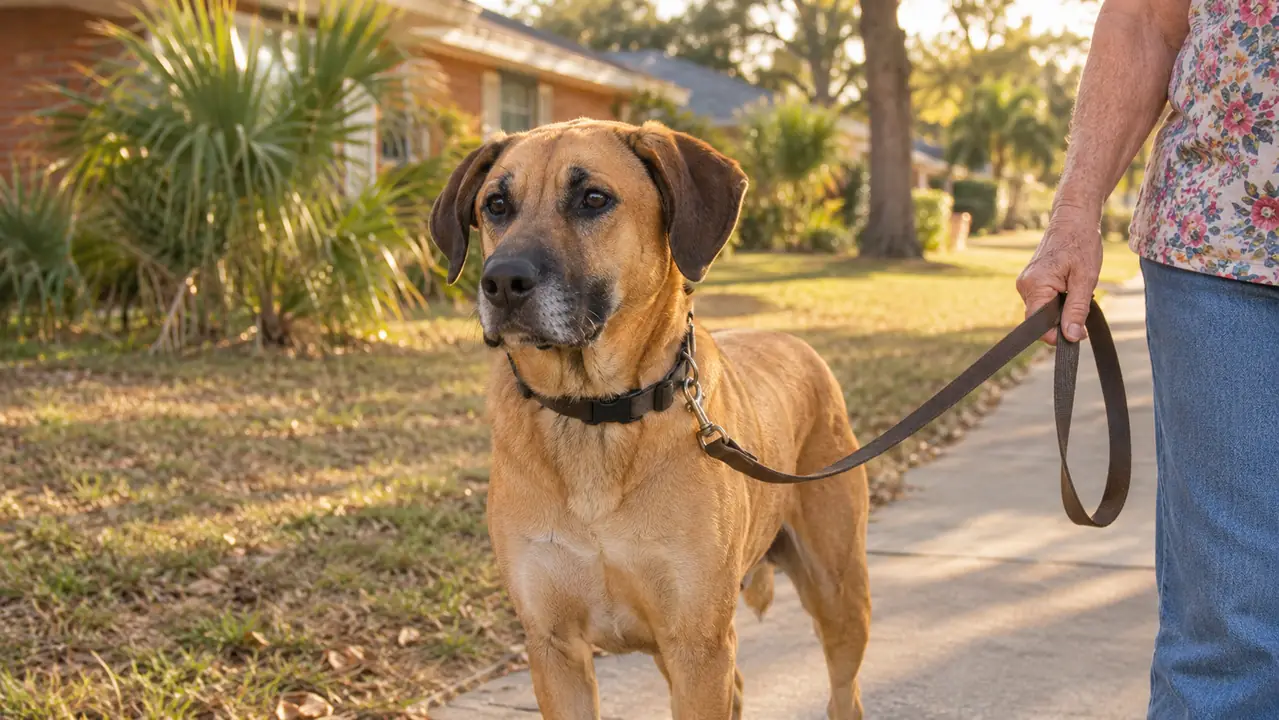
I put off buying a no-pull harness for two months because some stubborn part of me thought it meant I had already failed at teaching my own dog to walk. Moose came home from a Myrtle Beach shelter in early March, about four months old, all legs and floppy ears and a black muzzle, and by May he was somewhere around thirty-five pounds of pure forward momentum. I had grown up with family dogs, but this was the first dog I was training myself as an adult, and by the third week my right shoulder ached after every single walk. The PetSafe Easy Walk Harness, size Large, was not the first thing I bought for him. It was the first thing that changed how a walk felt.
I want to be plain about what this is. I am not a trainer, a behaviorist or a vet. I am a retired dental office manager with a fenced back yard and a dog who wanted to smell everything on the block at once. Nothing here works for every dog, and no strap on earth fixes a behavior on its own. What follows is the order I actually did things in our house and on our street, starting the week the harness arrived in May and running through this fall, including the parts I got wrong first.
The front clip did more for my shoulder than two months of me tugging back
The PetSafe Easy Walk puts the leash attachment on the chest instead of the shoulders, so a dog who leans in mostly turns himself around. The listing says it has been made since 2004 and has a one year manufacturer warranty. It is the harness I reach for on every walk now.
Amazon Check Today's Price on Amazon →Step 1: Fit it in the kitchen before you ever clip a leash to it
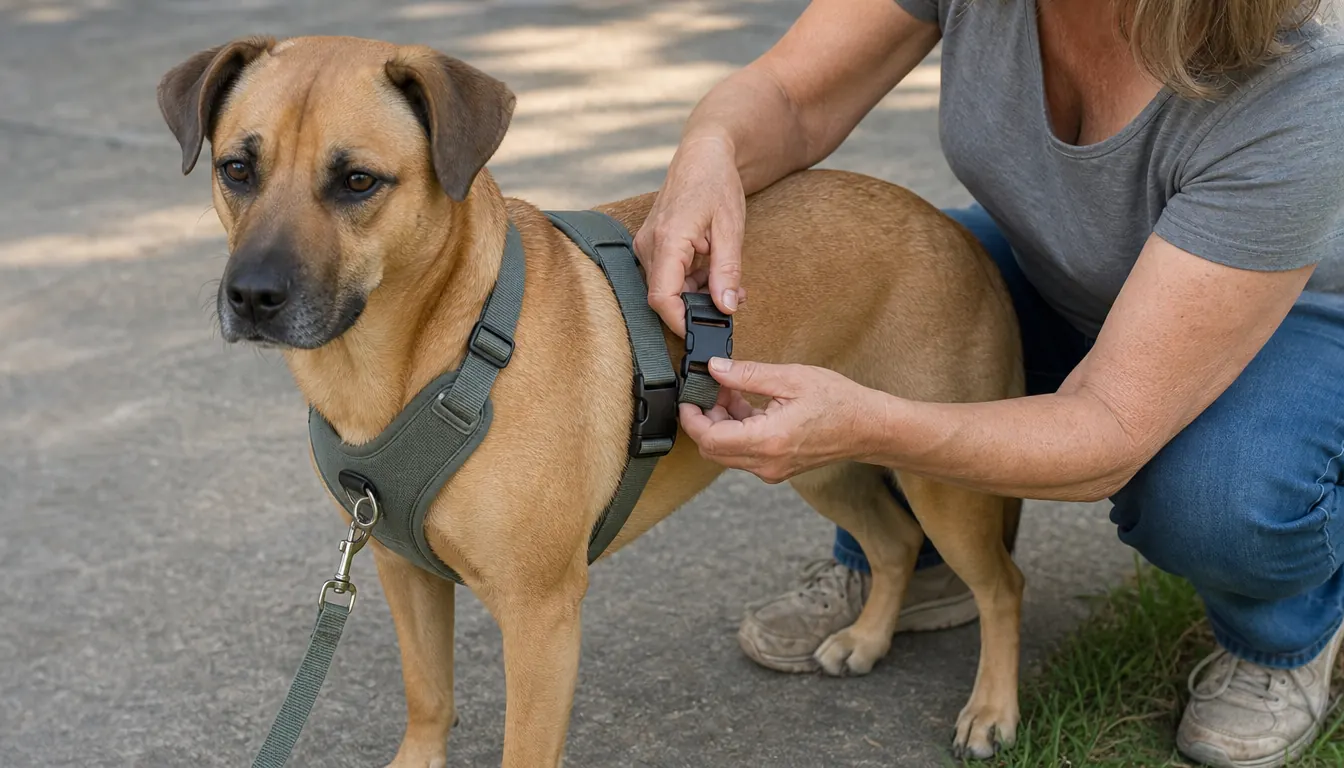
Large is a range, not a size, and I did not understand that until I had the box open on the counter. The first fitting I did was too loose because I was afraid of pinching him, and he walked out of it sideways in about four steps. The listing says the harness has quick-snap shoulder straps, and that the belly strap is a different shade from the shoulder straps so you can tell at a glance which one goes where. That sounds like a fussy little detail until you are kneeling on a driveway at 6:40 in the morning trying to work out which strap goes under a wiggling dog who would rather be eating a pinecone.
The fit that finally worked for us: snug against the body, snug enough that I can slide two fingers under a strap but not a whole hand, with the chest piece sitting low on the breastbone rather than up near the throat. I checked it every week for the first month, and I refit the straps twice between May and September as he filled out through the chest and shoulders. A harness that fit him in June was not the harness that fit him in August, and I would have sworn it was the same dog.
Do the first fitting indoors, with treats, and let the dog wear it around the living room for ten minutes with no leash attached at all. Moose did what I have come to call the bucking bronco for about ninety seconds the first time, then went back to his KONG like nothing had happened. If your dog does not settle after a few short tries, take it off and try again the next day instead of pushing through. The quick start guide in the box covers the basics and it is worth the two minutes it takes to read.
Step 2: Clip the leash to the chest ring and stop switching back
The whole idea of the PetSafe Easy Walk is that the leash attaches at the front of the chest, and the listing describes a patented Martingale loop that puts gradual pressure on the dog's shoulders. In plain English, when Moose leaned into the leash, the front of the harness came gently snug across his chest and turned him back toward me instead of letting him pull straight ahead with his whole body weight. That turn is the entire reason my shoulder stopped hurting. He was not being corrected. He was being steered.
My first-week mistake was nerves. I kept switching the leash back to his flat collar when I felt sorry for him, then back to the chest ring when my arm hurt, and all that did was confuse us both about what a walk was supposed to feel like. Pick the chest ring and stay with it for a couple of weeks before you judge anything. I also went back to a plain six foot flat leash, because a long retractable line and a front clip are working against each other, and I could not manage both with one hand and a bag of treats.
One more thing about the leash hand. I hold the loop over my thumb with the rest gathered loosely in the same hand, on the same side as the dog, and I keep that arm low and quiet. When I held my arm out stiff and high, Moose read the tension and pulled harder. When I let the leash hang with a soft curve in it, he had nothing to lean against.
Step 3: Pay the dog for a loose leash, not for stopping
The harness made pulling less rewarding. It did not tell Moose what to do instead, and that part was always going to be my job. So I went back to the clicker I had been using since late March for sit and down, the Starmark Pro-Training Clicker, because by then the sound of it already meant something good was coming.
I clicked and treated every time the leash went slack on its own, which at the beginning meant roughly every eight feet. Not when he stopped pulling because I had stopped walking. When he chose to ease off and the line went loose, that got a click and a piece of chicken. For about ten days I felt ridiculous standing on the sidewalk clicking a dog for doing nothing, and then one morning he offered me four loose steps in a row without being asked.
The placement of the treat matters more than I expected. I deliver treats at the seam of my left pant leg, close to my body, not out in front of me like a fishing lure. Moose is food motivated enough that he would follow a treat anywhere, which is exactly the problem I was trying to avoid. I wanted the good stuff to happen next to me, not two feet ahead of me. Practicing this in the driveway for five minutes before we left the yard made the actual walk much easier, because he was already in the habit of checking in before we got to anything interesting.
The harness made pulling less rewarding. It did not tell Moose what to do instead, and that part was always going to be my job.
Step 4: Change how you walk before you change the dog
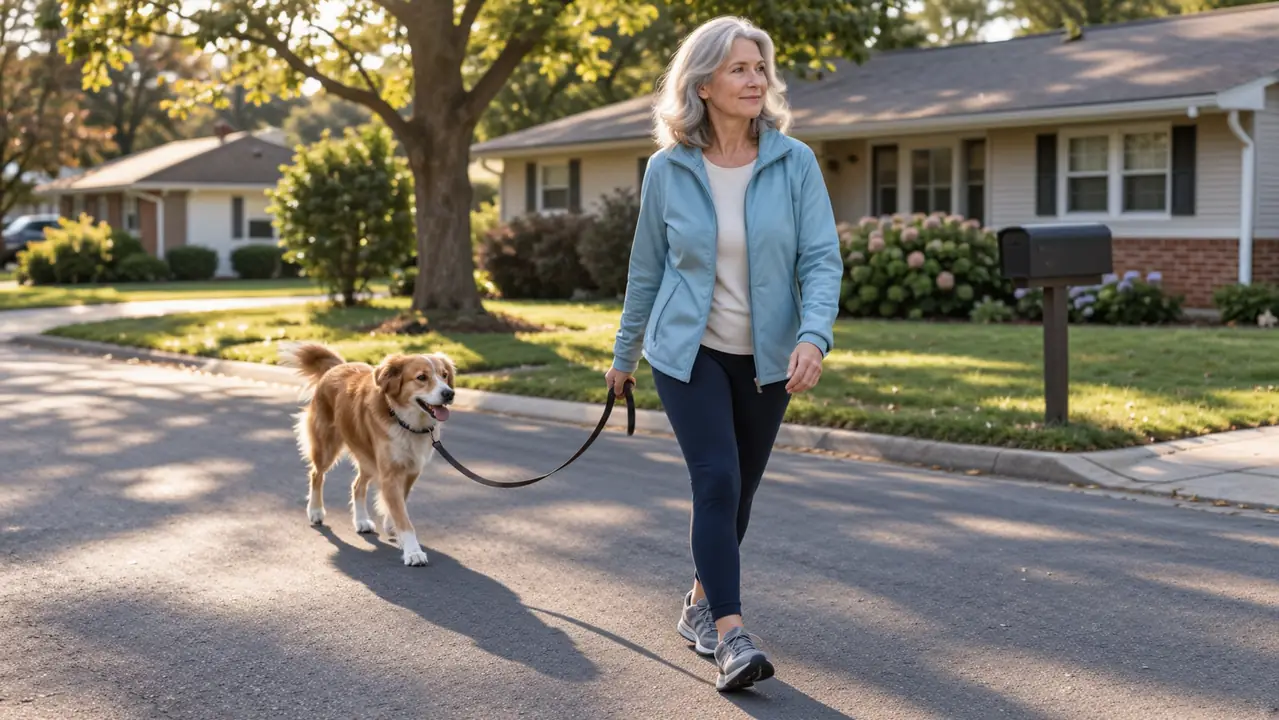
The most useful thing I did had nothing to do with gear. I stopped walking in a straight line. When the leash tightened, I stopped moving, waited for the slack to come back, and then went forward again. When he got really wound up about a smell or a driveway, I turned and walked the other way for ten paces and then turned back. It looked ridiculous to the neighbors for about two weeks. It also taught him that pulling forward produced nothing and that being beside me produced the thing he wanted, which was more walking.
I also built sniffing into the walk on purpose. Ten minutes of sniffing a hedge or a fire hydrant tires Moose out more than a mile of marching, and a tired dog pulls less than a fresh one. So we do a stretch of walking with slack in the leash, then a few minutes where I just stand there and let him read the newspaper. Walks got longer and calmer once I stopped treating every stop as a setback.
I am not going to pretend the harness cured everything. He still pulls when he sees a squirrel or one particular cat on Elm Street, and I do not have a fix for that. What changed is the recovery time. It used to take me half a block of hauling to get him back beside me. Now it is usually a couple of steps and a click, and my shoulder does not pay for it. In our house, that is the difference between a chore and a nice way to start the morning.
Step 5: Make it the everyday, then keep checking the fit
We walk morning and evening around the neighborhood, and once or twice a week we drive over to the beach access path early enough that it is just us and the gulls. The harness goes on every time. That consistency is what did the most work, more than any single session I could point to. Moose now stands still while I buckle it, which I consider one of my finer achievements of the year.
The listing says hand wash only, so I wash it in the kitchen sink with a little dish soap and hang it over the back fence to dry. Once a month I run my thumb along the straps at the buckle and check for fraying, mostly because he likes to mouth the leash when he is bored. The listing also says there is a one year manufacturer warranty, which I have not had to use, but I wrote the date on the calendar anyway because I write everything on the calendar.
Refitting is the step people skip, and it is the one that makes a good harness feel like a bad one. He is about forty-five pounds now and still filling out through the chest, so I check the fit on the first walk of every month. Too loose and the front clip slides around and stops steering. Too tight and he walks stiff and unhappy. It takes ninety seconds and it is the difference between the harness working the way the PetSafe design intends and the harness just being a thing he wears.
What Else Helps
Keep your training sessions short and separate from your walks. Five minutes in the driveway twice a day did more for us than one long heroic attempt, and it is much easier to stay patient for five minutes than forty. I use plain boiled chicken for leash work because it outranks everything else in his world, and I cut the pieces small enough that he is not chewing while we are moving. If your dog gets frantic the second the leash comes off the hook, hand him something to lick before you open the door. A LickiMat with a thin smear of plain yogurt on the kitchen floor while I put my shoes on turned our departure from a wrestling match into a routine.
Keep a flat collar with tags on the dog at all times and treat the harness as walking gear, not a place to hang identification. If your dog is suddenly pulling after months of walking nicely, or if the pulling comes with stiffness, a limp or a reluctance to go up stairs, that is a conversation with your vet and not a harness problem. Moose got a clean checkup the week he arrived and has had no issues since, and I still remind myself that a change in behavior can be a change in how a dog feels.
When to Stop and Call Someone
A front-clip harness is a steering tool. It is not a solution for aggression, lunging with intent to bite, or a dog who is genuinely panicking on the street. Moose was nervous with new people and loud noises early on, and that is a normal rescue-dog thing that we worked through slowly with treats and distance, but if your dog is freezing, screaming or snapping on walks, stop the walks in that location and get help. Ask your vet first to rule out pain, then look for a certified trainer or a veterinary behaviorist. I would rather tell you that plainly than have you buy a harness expecting it to do a job it was never built for.
Six months in, it is still the only walking gear by my back door
Same harness, refit twice as he grew, washed in the sink and hung over the fence. If your shoulder is sore and your dog is winning every walk, this is the one I would hand you.
Amazon See the PetSafe Easy Walk on Amazon →